Showing posts with label history. Show all posts

Icons and Shipwrecks


It is no secret that geography shapes culture; that we are influenced and inspired by the places we happen to be.

Lectures such as these provide insight that puts contemporary art and design into context. If you're in Istanbul this month, consider the following opportunities to learn a little more about Turkish culture and history.


by J. Michael Featherstone, CNRS   
April 20 @ 6:30 pm 


by Assoc. Prof. Dr. Ufuk Kocabas, Istanbul University 
Head of Department of Conservation of Marine Archaeological Objects


---
If you're coming to Istanbul, or even if you're already here, let us introduce you to the artists and designers we've been working with for over ten years on one of our customized shopping trips.

From Ottoman Caftans to Istanbul Fashion Week

Last week the Turkish Cultural Foundation announced an online gallery of caftans from the Style & Status exhibit praised in the Washington Post and the New York Times.

So I had a look.


Later I read this Zelfist post by Zehra Elif Taş questioning the designers chosen to show their collections this week at Istanbul Fashion Week. I asked her who she would like to see in the show, and this is what she responded.

Thinking from a Behind the Bazaar perspective, I was curious what connected the first event to the second; how are today's Turkish fashion designers influenced by what the Ottoman Empire left behind?

How's this?


Or what about the designer Arzu Kaprol whose philosophy is:

"to express her enthusiasm within a context where many details reflect the mystery of the city and the Ottoman culture."

Maybe it's a good question for Zehra - Which of today's Turkish designers are most inspired by their past? Which collections best exhibit influences from Turkey's rich cultural heritage?


 -----
{Caftan images from Style and Status}
{Cintamani print dress image from Idil Tarzi}
{Quote from Arzu Kaprol}

The Yilditz Palace Series

If you are in Istanbul on Tuesday, 8th December and would like to listen to a talk on Ottoman palaces, little known aspects of their history and their significance today, then don't miss the first talk of a series called 'Palaces of the Reform Era' given by Professor Ilber Ortayli. 


The series has been organized by the Yilditz Palace Foundation and hopes to shed light on the past. Given the unique structure and history of Ottoman royal dwellings, particularly during the turbulent Reform years, the series promises to be very interesting.


Place: International Lounge, The Conrad Hotel, Besiktas. 
Date: Tuesday, 8th December 2009 
Fee: 70 TL

For further details, directions and making reservations call:
The Yilditz Palace Foundation on 0212 260 5603
General Secretary Banu Aydek on 0212 512 5858

Inside the Harem

If you find yourself in Istanbul this week I must insist that you visit Reyyan Somuncuoğlu's studio exhibit at the Adile Sultan Palace in Kandili, Üsküdar.

Several years ago I met Ms. Somuncuoğlu for a personal tour of the palace and to hear her talk about each of her paintings. It was one of the most magical experiences I've ever had in Istanbul.


She described how she spent months working with a historian to delve deep into the lives of women who had lived in the harem; including the wives, mothers and concubines of various sultans. After her research was complete, she swept it aside and began painting their stories.


As we walked the halls and climbed the palace staircases, Reyyan explained a particular series of paintings which depict four women who were both wives of sultans and who had also given birth to sons who became sultans. Ironically, all of them were also foreign-born women who had been strategically married into the Ottoman empire. They were the original Expat Harem*.


She went on to explain that although they lived hundreds of years apart, she had found a way to bring them together under one roof through this exhibit.

Even if you have no interest in the harem or its history, if you're fortunate enough to meet Reyyan Somuncuoğlu and have her intoxicate you with the stories of her paintings you will count yourself very lucky and I daresay you will not soon forget the experience.


Visit this page for more information on her studio exhibit which ends November 30th. 

All images in this post were taken from Reyyan Somuncuoğlu's page at Lebriz where you can go to see more paintings in the exhibit.

But you really must see them in person.

*This is an affiliate link.

Secrets of Istanbul

It's probably obvious from our blog that we love Istanbul! But what matters a lot to us is that we get to show a side of Istanbul which no-one really knows about - not even the locals. Turkey is about so much more than beautiful architecture, mosques, hospitality and delicious food. 

Wouldn't you like to discover how the famous hand-painted tiles inside the Blue Mosque were made? The revolutionary story of Islamic illustration and calligraphy? What an Ottoman university (medrese) was like 600 years ago? Whether these arts still live on today?


The ancient art of Ottoman calligraphy - 'Hattat'. Artist: Selim Turkoglu

Our excursion answers all of these questions by letting you into their secrets and allowing you to observe. You get the opportunity to see the traditional arts and crafts in their ancient settings as well as how modern designers incorporate them today. Our aim is to support these arts and designers by sharing them with you. 

Oh, and with a special designer discount, you can buy your souvenirs and gifts from the designers and artisans happy in the knowledge that you have supported them and that you'll be taking home something a little more different than the expected Turkish rug and fez!


For details contact us at behindthebazaar@gmail.com

The Luxury of a Turkish Bath

In Irfan Orga's book Portrait of a Turkish Family* he gives a vivid account of his grandmother's excursions to the local Turkish bath. He paints a colorful picture of how she would oversee the cook's preparations, the accoutrements she would bring along, and the hushed conversations that took place within the marbled walls. It is a romantic picture of life before the war when such events had much more significance in daily life.

Image from jefield on flickr


Today it is still possible to cross the threshold of Istanbul's oldest hammams and find yourself transported to a more indulgent time. It's where women would prepare days in advance to go gossip with their friends and where mothers would visit to find proper wives for their sons.


And it's where National Geographic recommends you visit at least once in this lifetime. In fact, Reuters reports that the popularity of hammams is on the rise along with the development of the spa industry and this kind of luxury tourism.

What other excuses do you need to indulge?


{*This is an affiliate link.}

The Hidiv Pavilion - romancing the Asian side

The Hidiv Pavilion

A city of two continents, it's often difficult to pick which side - Asian or European - is nicer. Turks have their own, very deep-rooted preferences and a person who has grown up on the Asian side will rarely ever want to move their home to the European side and vice versa. It's all about nostalgia, community and roots.

Yet, as travellers to Istanbul usually focus on the major sightseeing attractions of the European side, too often the more elegantly calmer Asian side can be overlooked by visitors. Full of little palaces and pavilions built as retreats for sultans and pashas, the green, lush hills and parks are just waiting to be discovered as the other, more romantic face of Istanbul.


The Hidiv Pavilion is a large mansion nestled in lush woods on the hills overlooking the Bosphorus. It was built by the Ottoman Governor of Eygpt, Abbas Pasha. Governors appointed by the Ottoman government to Eygpt were called 'Hidiv' (Khedive) and this particular handsome and Swiss-educated young Governor contracted the Italian architects, Antonio Lasciac and Delfo Seminati, to build a minor palace in 1907. The gardens were designed by his second wife, Hungarian Countess May Torok von Szendro, who also directed the building of the pavilion. Its tower houses one of the first steam elevators to be used in Istanbul.


The Pavilion was restored to it's exact former glory in the 1980's and is now operated by the Istanbul Municipality as a hotel, restaurant and tea garden. Many childhood summer vacations included five o'clock tea and cake in the gardens of the Pavilion and, although prices are very reasonable, the quiet and regal atmosphere is such that you are transported to the heady and luxurious Ottoman days.

Perhaps due to its endearing love story, the Hidiv Pavilion is also a beautiful and romantic setting for weddings and banquets. As someone who chose to be married in an equally beautiful historical building on the Asian side just opposite The Maiden's Tower, I would say Istanbul is the location for romance!

All Hidiv Pavilion Images: Beltur A.S.

Address: Çubuklu Korusu Çubuklu Yolu No:32 Beykoz/İSTANBUL
Tel: 0216 413 92 53 - 0216 413 96 64 - 0216 425 06 03 - 0216 425 06 04
Fax: 0216 413 96 99

An Exotic Pleasure - Haci Bekir Turkish Delight

Turkish delight is a delicacy which couldn't have been more aptly named - as it became known in Europe thanks to an English tourist who took the heavenly treat home with him and caused a small sensation.


While the very first versions of Turkish delight were invented by 16th century Ottoman confectioners, it went through several versions over the centuries until it was honed to perfection. The most popular types today are the pistachio, rose, coconut and almond, mint and the mastic. In truth, it's extremely difficult to choose a favourite as there are more than thirty varieties and they are all delicious.

A popular variety: Rose flavoured Turkish delight.
Haci Bekir first opened his little confectionery shop in Istanbul in 1777 where he would produce his delicacies in a small section in the back. Today, despite growing into several shops and earning worldwide renown, the authentic little shop in Bahcekapi, Istanbul is still run by the fifth generation of his family and they have carefully preserved his stove and equipment in the back room. It is the oldest business in Turkey operating from the same premises for nearly 250 years now.

Haci Bekir working at his counter: depicted in 'The Confectioner' by Count Preziosi. This painting now hangs in the Louvre Museum. Image: Orientalist Art

The same counter: the Bahcekapi shop today.

Although eating and sharing Turkish delight is traditionally saved for guests, special religious holidays or bearing as a gift to a dinner party in Turkey, we believe it is one of the ultimate feel-good treats to rival chocolate. Just a bite instantly makes you feel like a goddess (or a sultan).

Good quality, delicious Turkish delight can be bought in many reputable places in Istanbul and the luxurious treat is just one of those inimitable things that make us say, 'Turks do it better.'

Haci Bekir, Hamidiye Cad No. 81,Bahcekapi/Istanbul 34110
Tel: +90 212 522 85 43
Image credits: Haci Bekir A.S.

Two Palace Lectures from the Turkish Cultural Foundation

Founded in 2000, the Turkish Cultural Foundation is an organization whose goals are to promote and preserve Turkish culture through various programs such as its Art and Culture Lecture Series. It sponsors lectures both in Istanbul and in the United States.


If you are in Istanbul in October, there are two lectures scheduled. On October 8th Dr. Nurhan Atasoy will be speaking about the Traditional Aspects of Dolmabahçe Palace, and on the 9th Dr. Feryal İrez will give a lecture on Palace Furniture.


There are no lectures currently scheduled in the U.S. for October, which is a good excuse to come to Istanbul. We recommend you attend the lectures and then tour the palaces armed with this new, educated perspective.

Seeing Istanbul from such a point of view is sure to add more meaning to your visit.

Fine Ottoman Cuisine at Asitane Restaurant


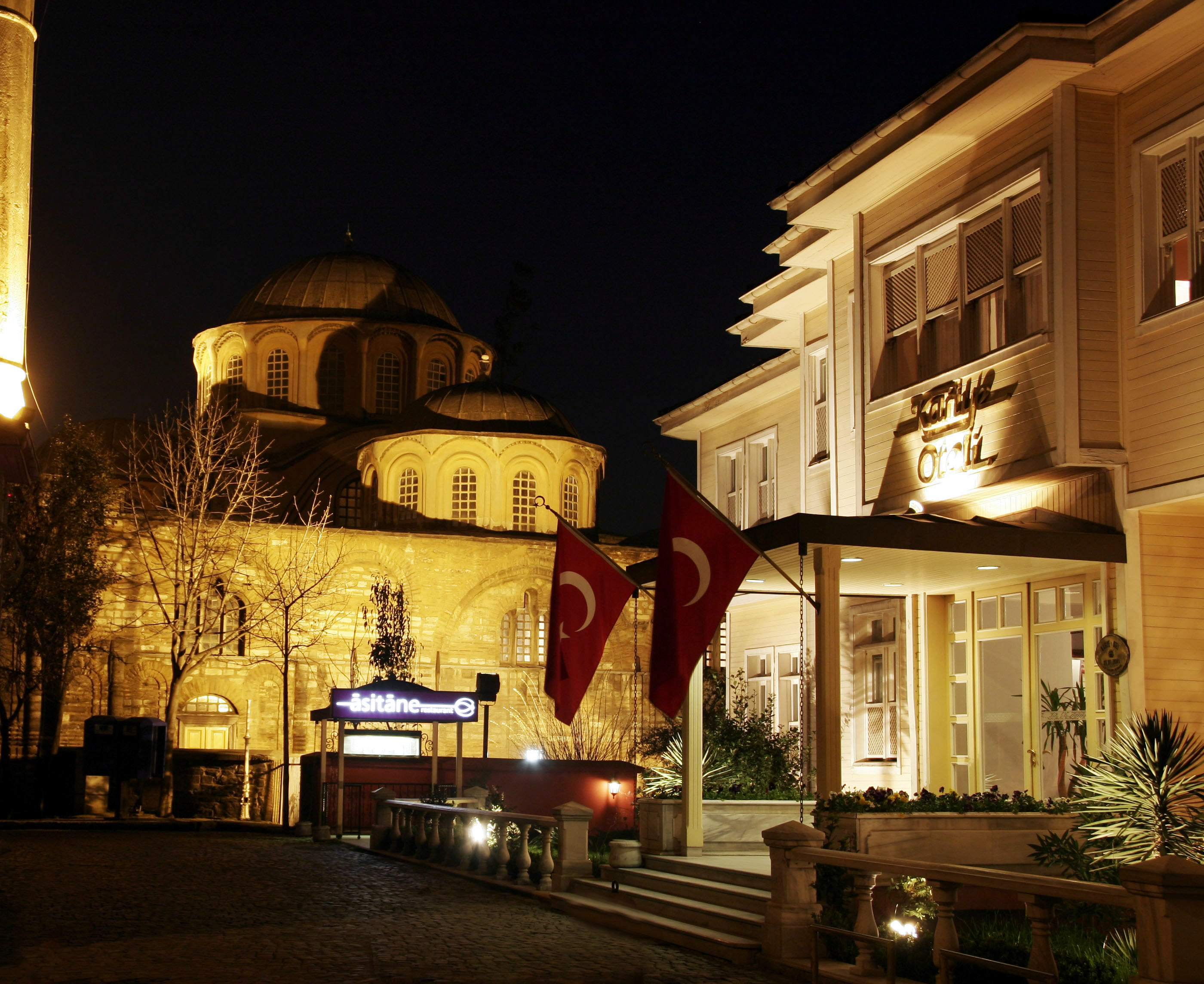
Chora Church is a favorite museum for visitors to Istanbul, most famous for its mosaics and frescoes. As the tour buses shuttle visitors in and out, they pass by a 19th century mansion that has been restored and is now the Kariye Boutique Hotel. But the real treat is the Asitane Restaurant inside the hotel.


Serving fine Ottoman cuisine, Asitane describes its inspiration like this:

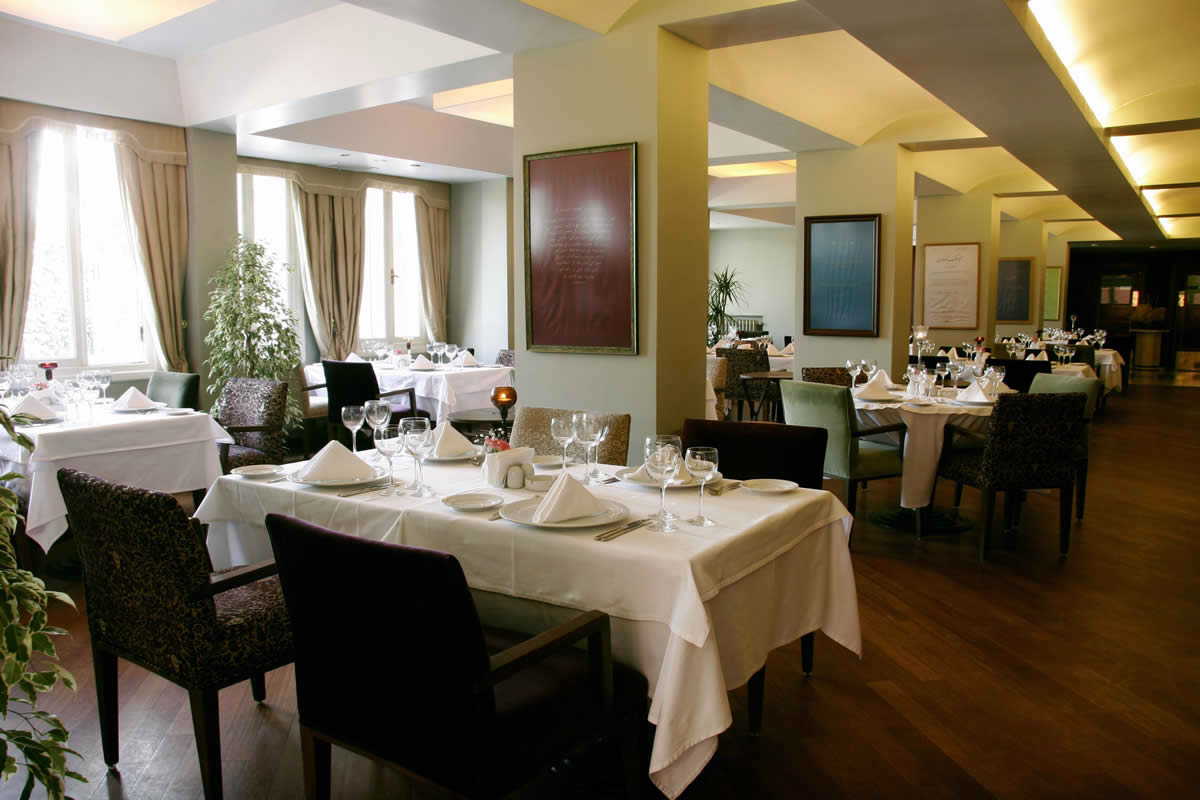
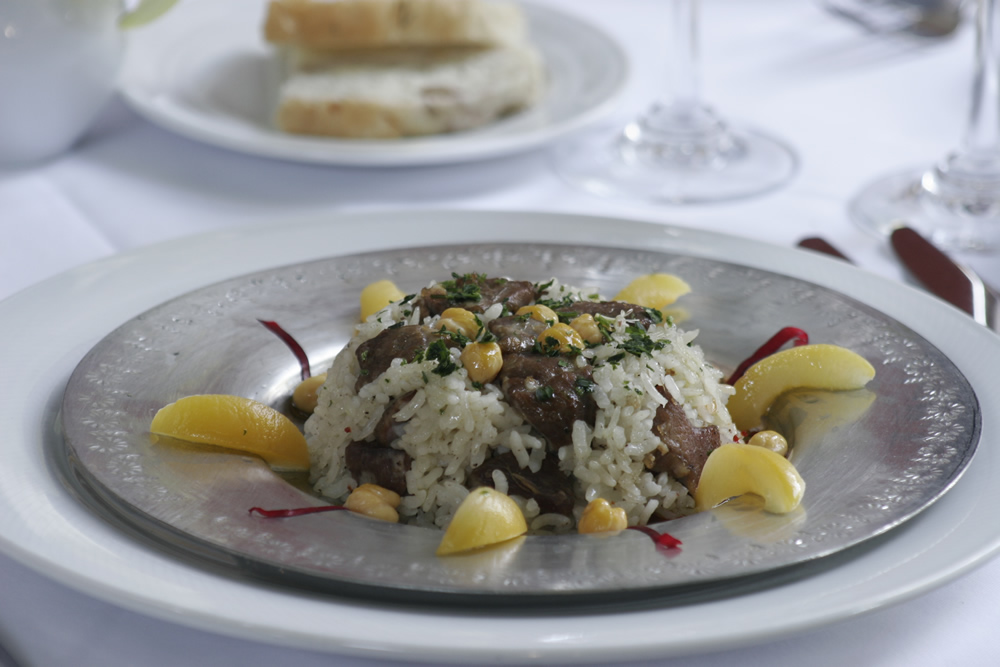
"The large and airy Asitane Restaurant serves imperial Ottoman cuisine, incorportating Central Asian, Anatolian, Middle Eastern and Balkan flavours, resulting from intensive research undertaken at three palace kitchens (Dolmabahce, Topkapi and Edirne) to test and recreate long-forgotten imperial dishes, whose recipes were traditionally kept secret. Some of the rediscovered dishes on the menu, such as veal in apple sauce, were serverd at the circumcision feast held for two of Suleyman's sons in 1539. The location might be off the beaten track, but Asitane is the one and only restaurant in the city where intrepid diners can experience such unlikely-sounding treats as almond soup. This is a restaurant for the serious culinary adventurer."


Personally, I don't think it takes a serious culinary adventurer to enjoy the meals here. All it takes is someone who appreciates tasty food simmered in a bit of history.

Welcome to Behind the Bazaar

Centuries-old artisan workshops

Behind the Bazaar is the enfolding of a story which takes two expat women from a providential meeting in the nostalgic quarter of Istanbul known as Beyoglu on to a journey of friendship, partnership and creative discovery. Tara is an American and came to Turkey seven years ago when she married. She is a successful entrepreneur in her own right with company Citara's and blog Turquoise Poppy. Figen is half British/half Turkish and came to Turkey 16 years ago from London, also through love and marriage. She has built a very successful online business of her own, The Knit Box and also publishes her own designs.


With many similar passions and ideas, it only seemed right for us to join forces to create Intarsia Concept, which supports artisans, small businesses and creative endeavours. Behind the Bazaar was born out of a joint passion for Turkish arts - both traditional and modern and particularly those created by women, as well as our desire to share the many secrets of Istanbul with people who will appreciate them. For Behind the Bazaar, we will always be grateful to Linda Alepin.


A modern twist on traditional art by young, women designers

So, anyone who is a traveler, a discoverer, an entrepreneur or simply a lover of arts, crafts and design; welcome again to Behind the Bazaar.